INFRASTRUCTURE
Fleurs Radio Telescope
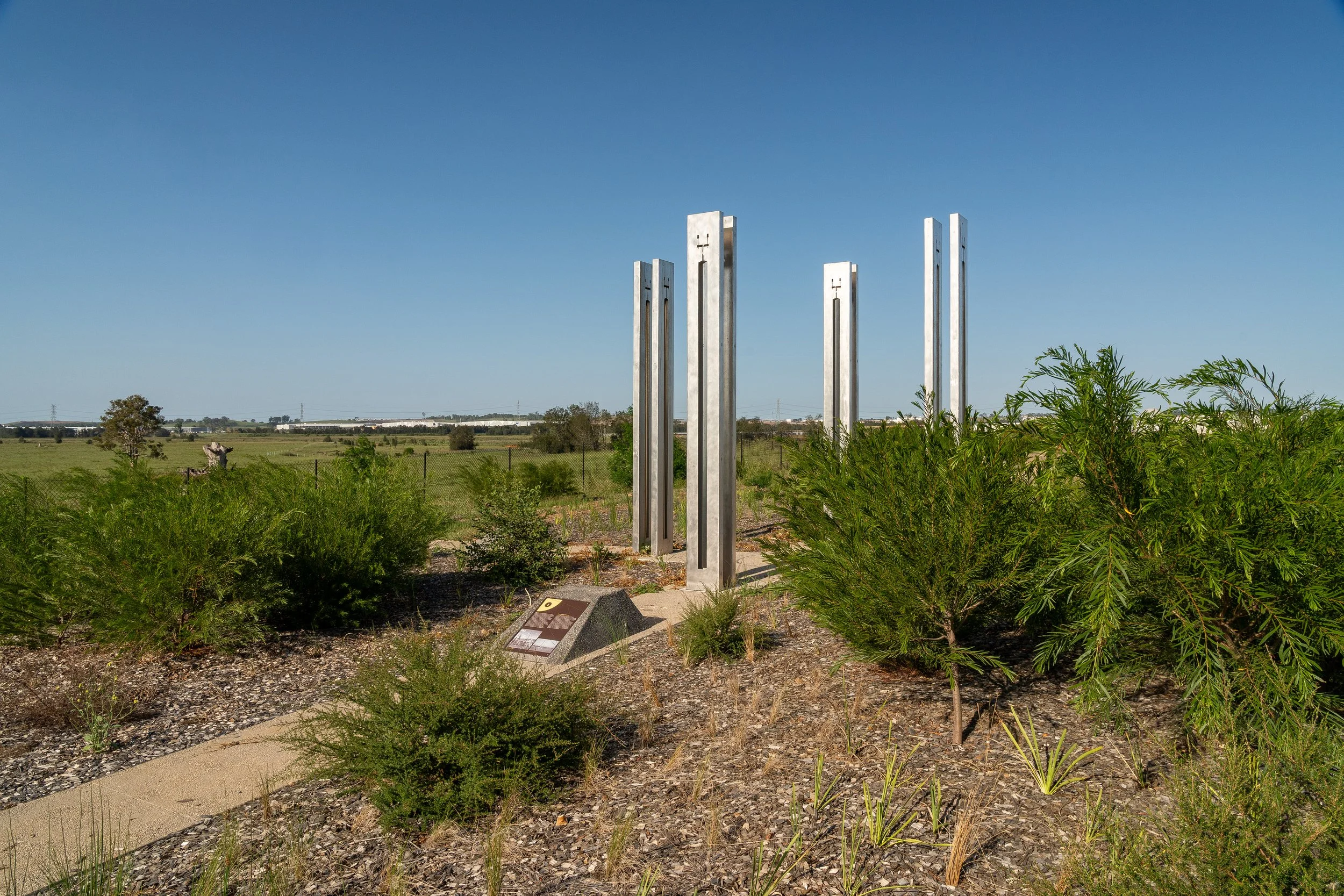
Fleurs Radio Telescope heritage interpretation sculpture documents the conservation and interpretation of a nationally significant scientific heritage site associated with early radio astronomy in Australia. Located in Western Sydney, the Fleurs astronomy field station played a pivotal role in mid-20th century scientific breakthroughs, contributing to the global development of radio astronomy through pioneering instrumentation and observational techniques.
The interpretation by Studio Colin Polwarth for Transport for New South Wales emphasises the retention and legibility of the site’s cultural landscape, where remnants of former telescopes, earthworks, and alignments are conserved as archaeological traces. This approach ensures the authenticity of the site while allowing visitors to understand its historical function and scientific importance by interpretation.
The heritage interpretation strategy communicates complex scientific history into an accessible, immersive public experience. Interpretive elements—such as signage, viewing platforms, and spatial markers—are integrated into the landscape to reveal former telescope positions, scales, and orientations. These devices communicate the invisible processes of radio observation and make abstract scientific concepts tangible without overwhelming the site’s character, aligning it with looking at the sky and the overall Aboriginal themed motorway.
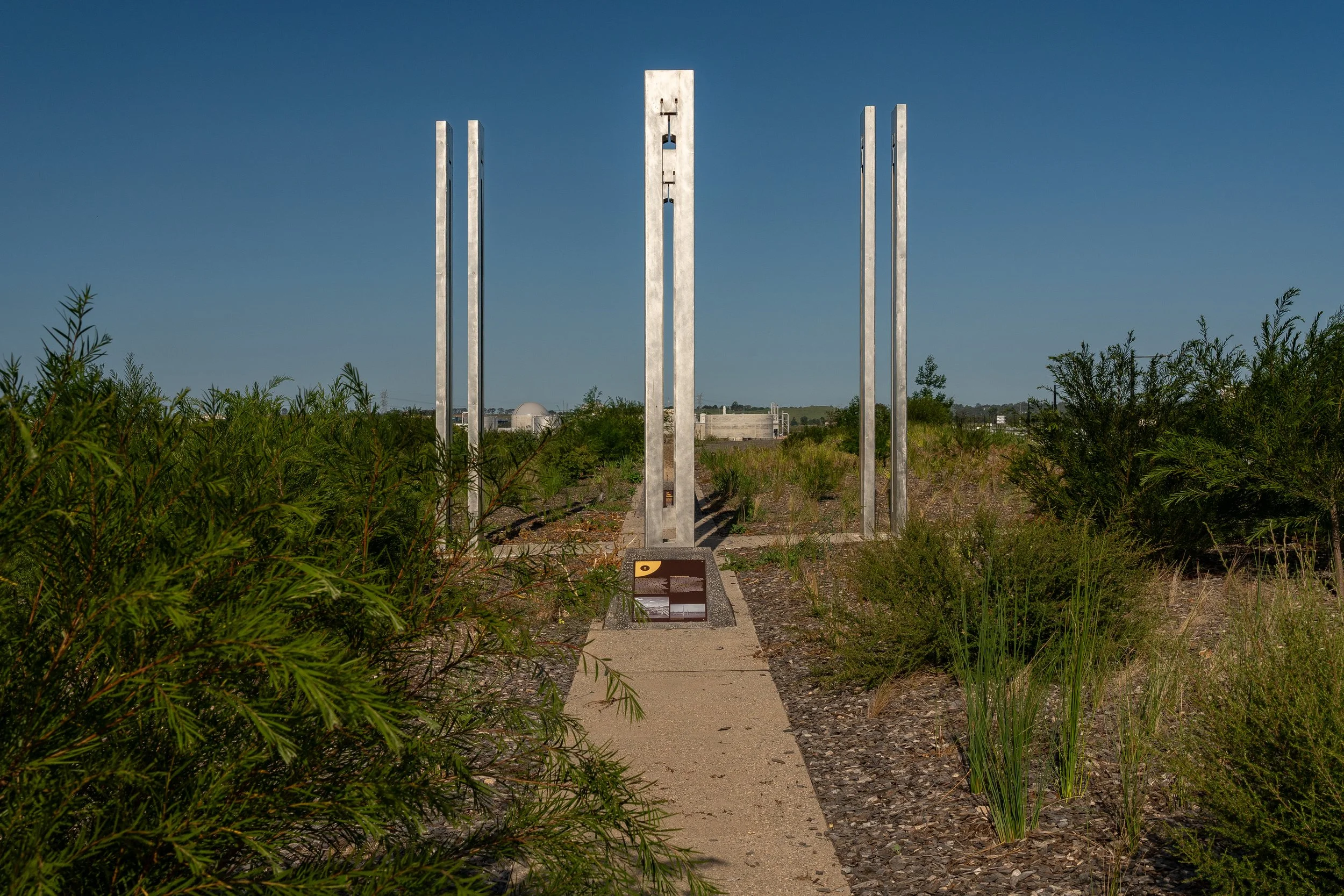
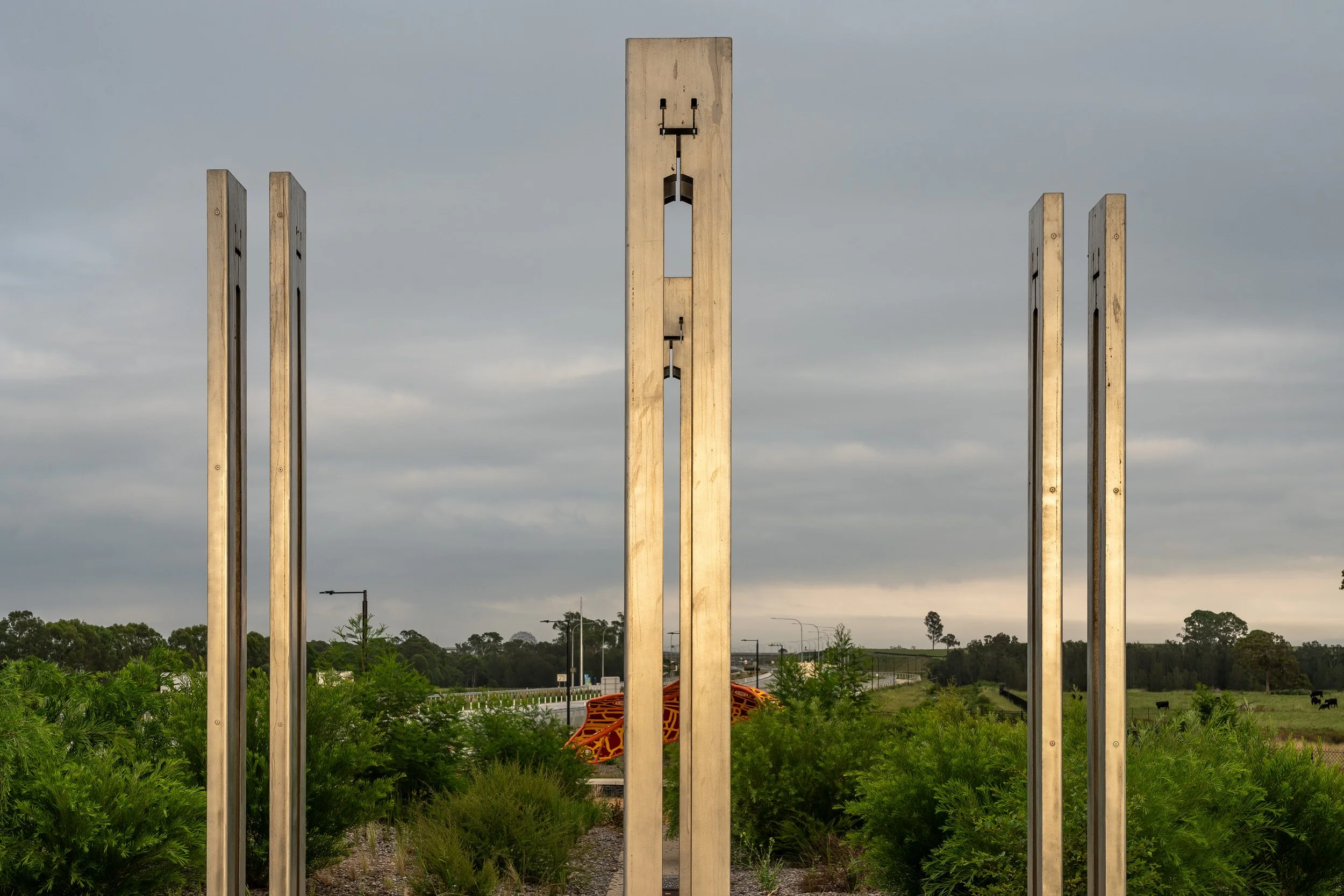
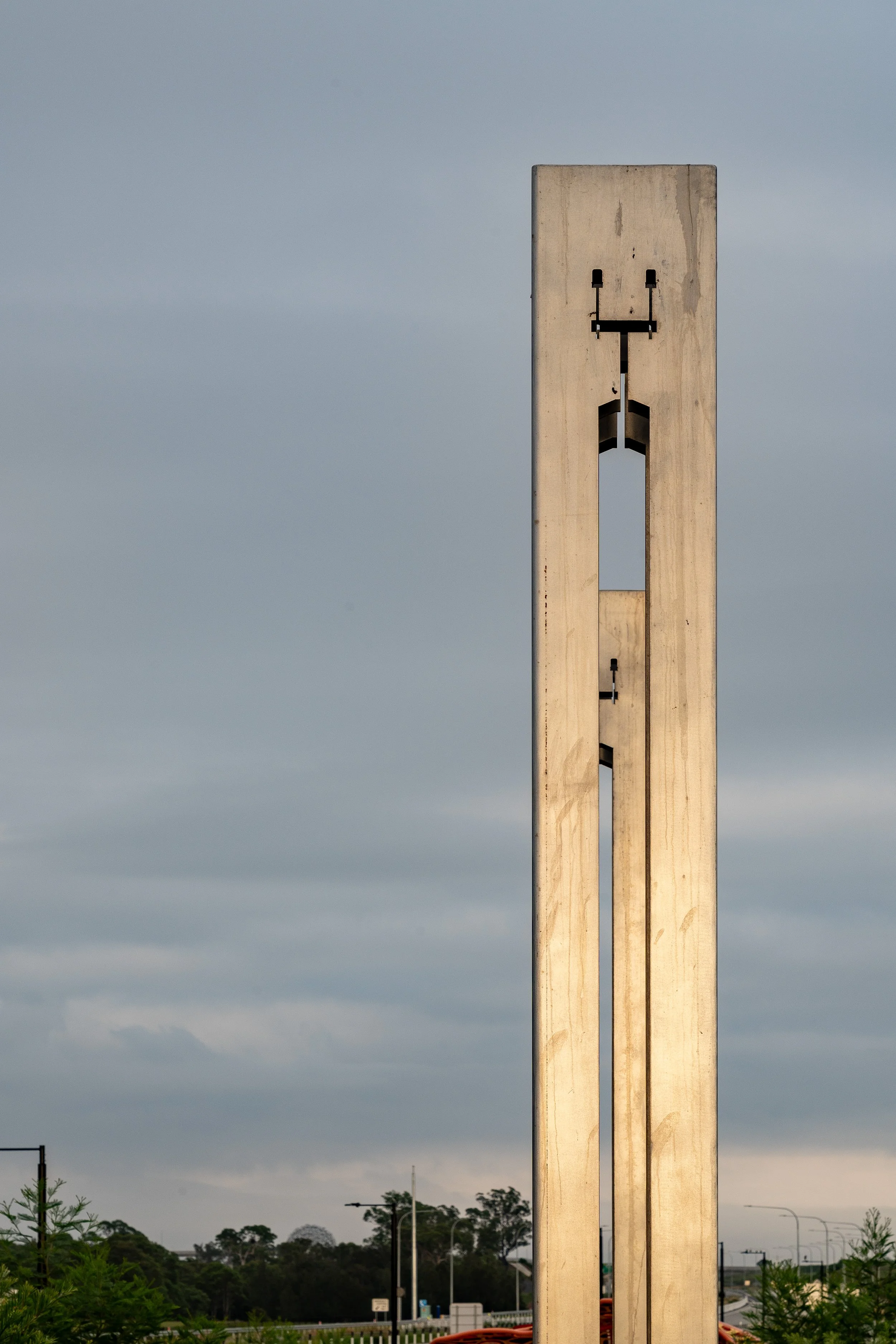
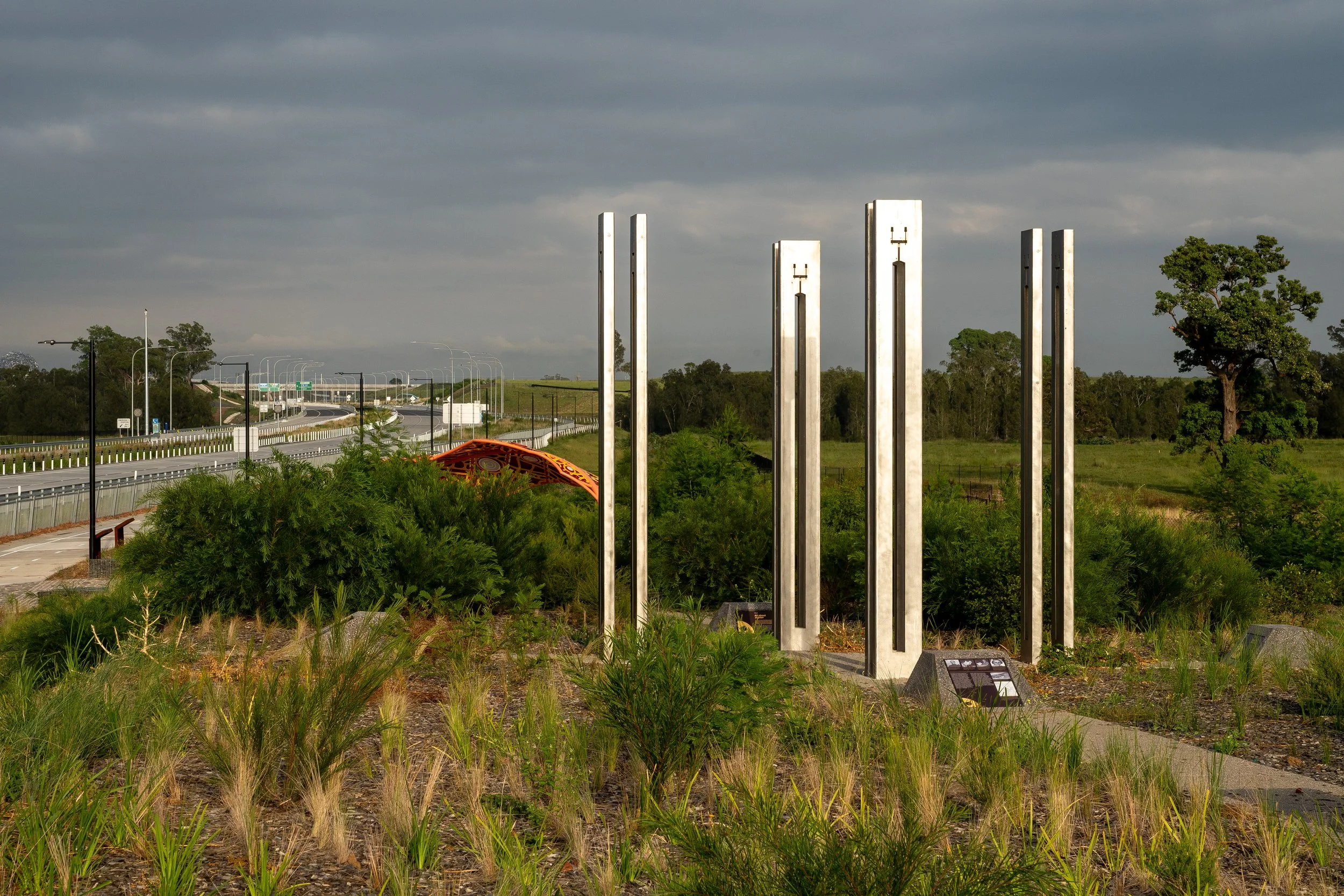
The landscape and sculptural design plays a central role in this interpretation. Subtle yet evocative sculptural interventions trace the geometry and movement of former radio telescope arrays, allowing visitors to physically engage with the spatial logic of the instruments. Materials and forms are deliberately restrained, often referencing industrial or scientific aesthetics, ensuring they complement rather than dominate the setting. The landscape design reinforces this approach through minimal, low-impact pathways and planting strategies that frame key sightlines and preserve open field conditions reminiscent of the site’s operational period.
Importantly, the project balances conservation with public accessibility. It protects archaeological remnants while enabling safe movement through the site, encouraging educational use and broader community engagement. The design fosters a contemplative atmosphere, where visitors can appreciate both the scientific achievements and the broader cultural narrative of Australian innovation.
Overall, the integrated heritage conservation, includes interpretation, landscape, and sculptural design work together to reveal meaning in a largely invisible and technical heritage site. It demonstrates how contemporary design can sensitively amplify historical significance, transforming a former research facility into a compelling cultural landscape.
See National Trust Award report