ARCHITECTURE
Angophora
Angophora is grounded in a philosophy of living lightly within a remarkable natural landscape, guided by care, restraint, and long-term custodianship. The project seeks to regenerate and protect the land through thoughtful siting, native planting, and habitat creation, supporting local ecosystems and wildlife while recognising human occupation as temporary and respectful.
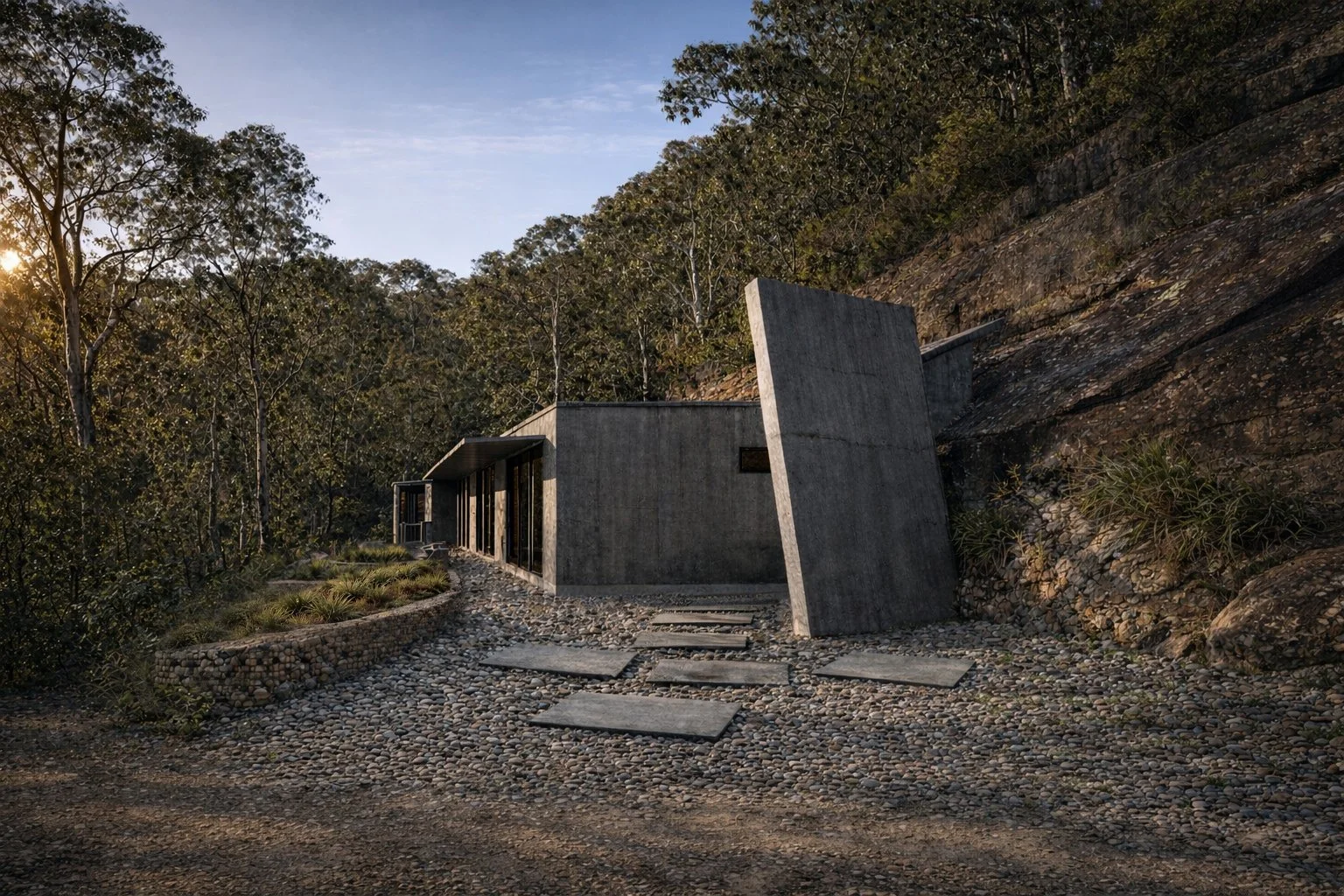
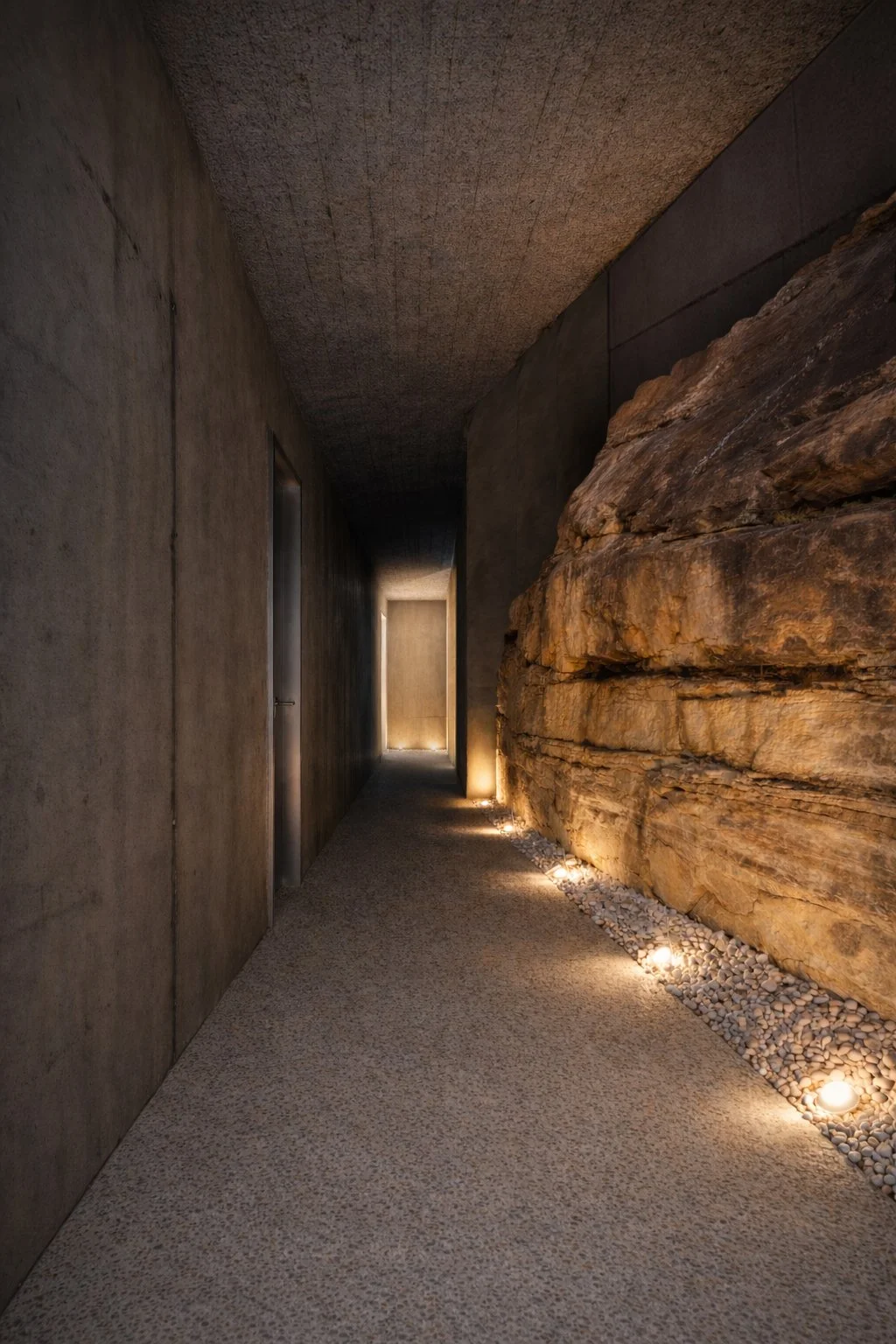
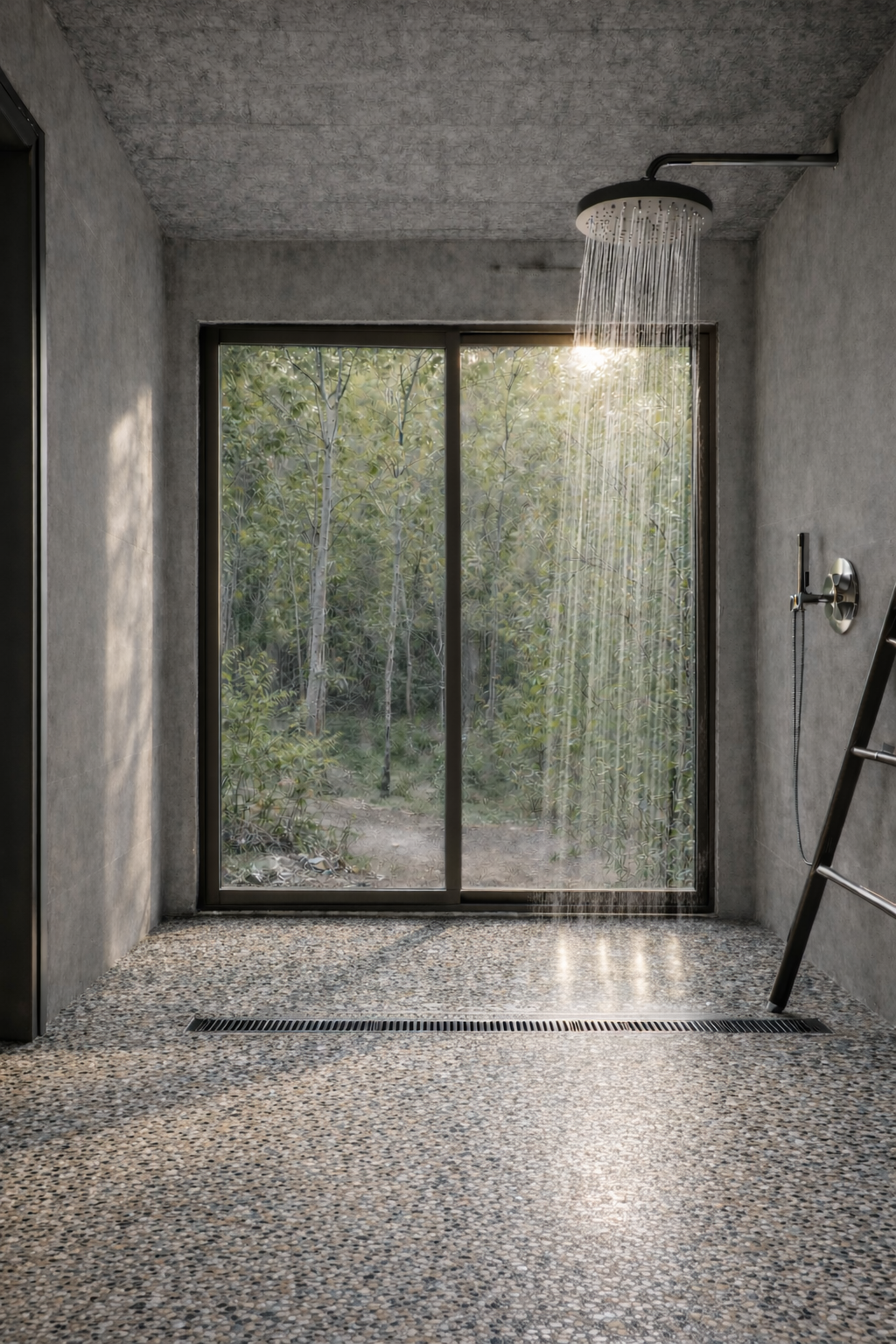
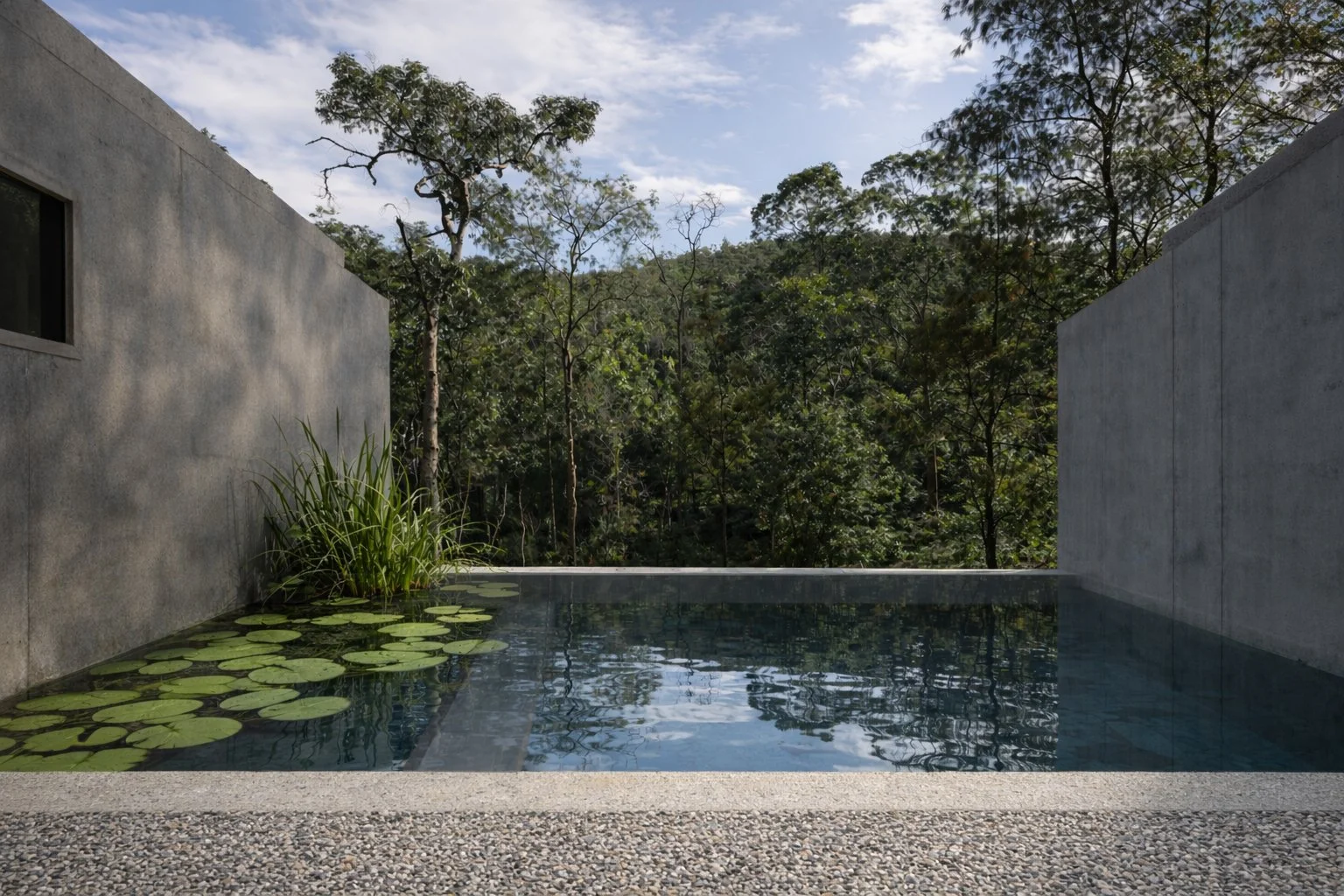
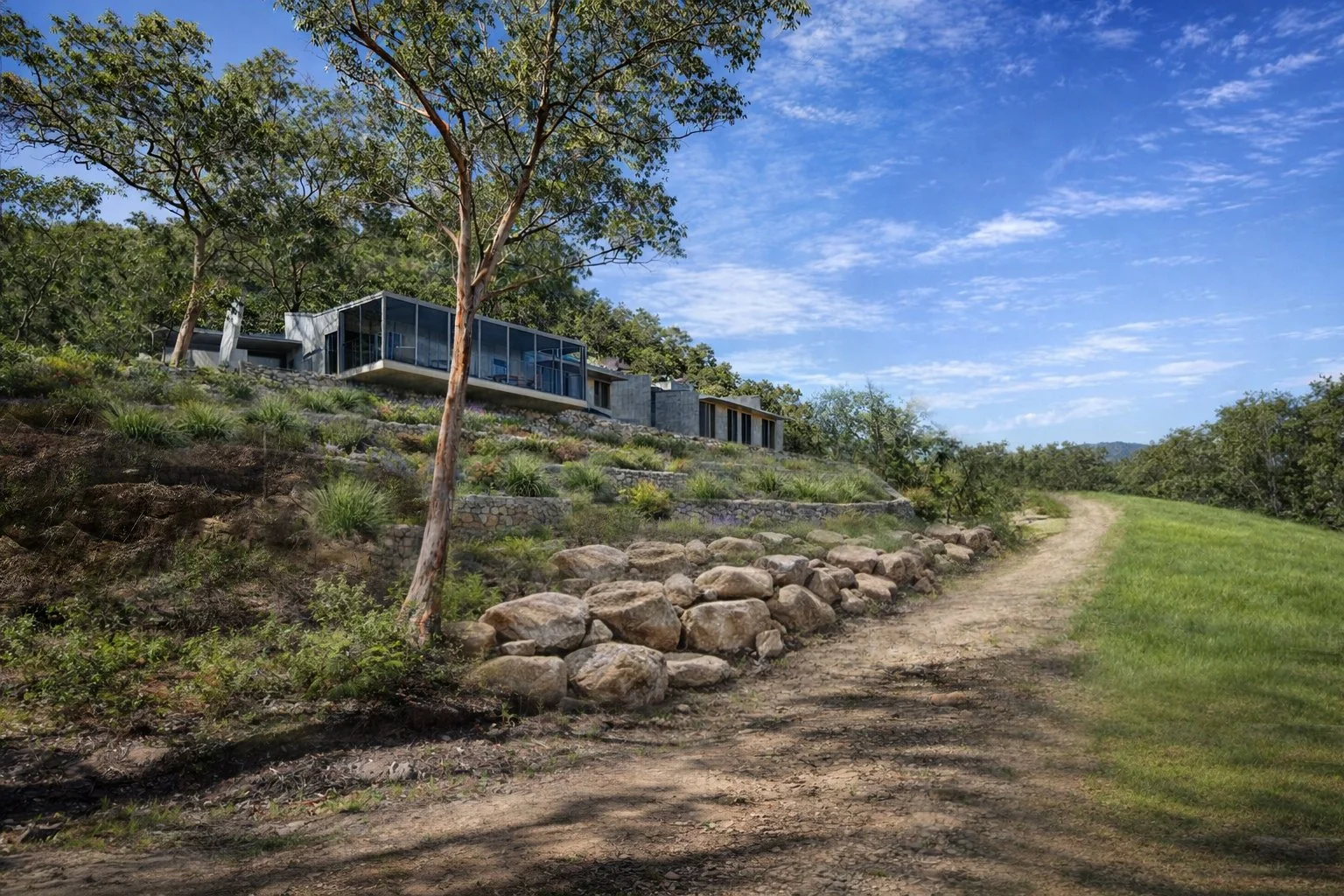
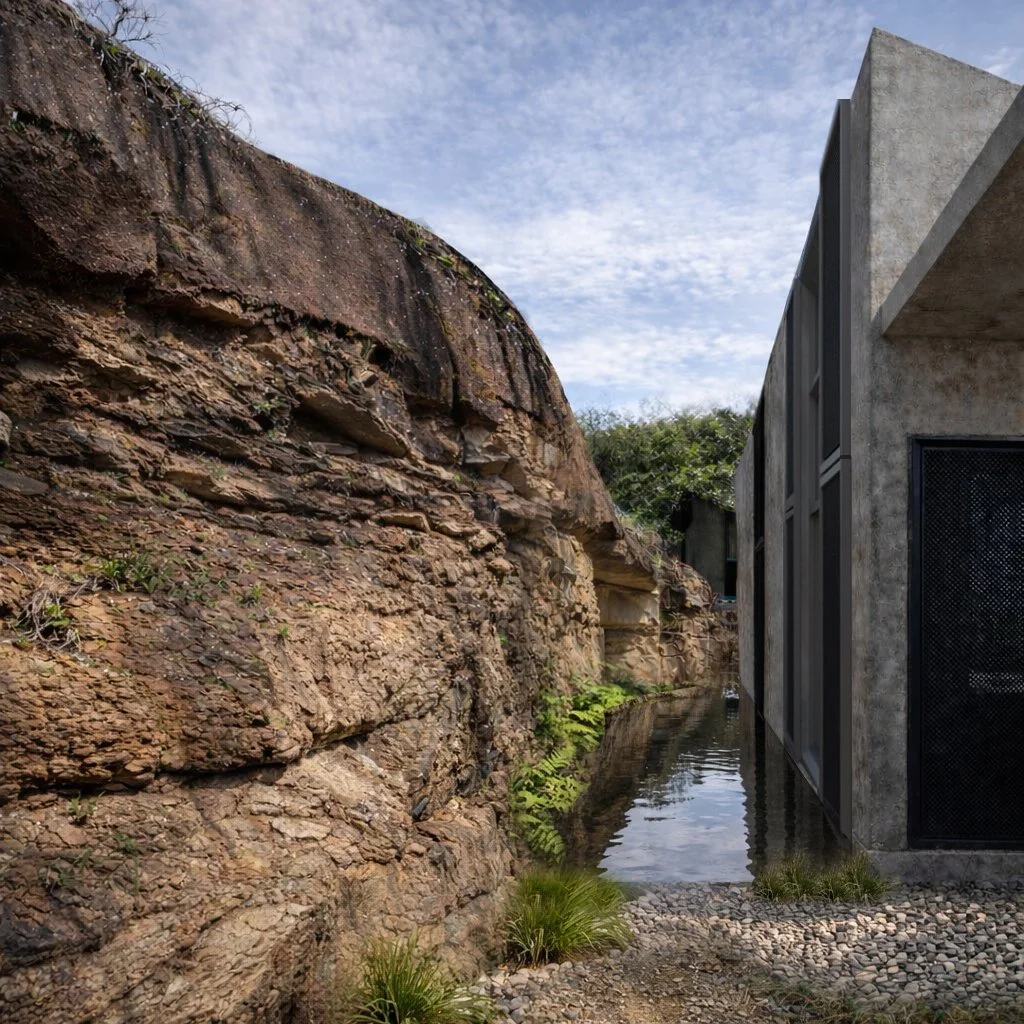
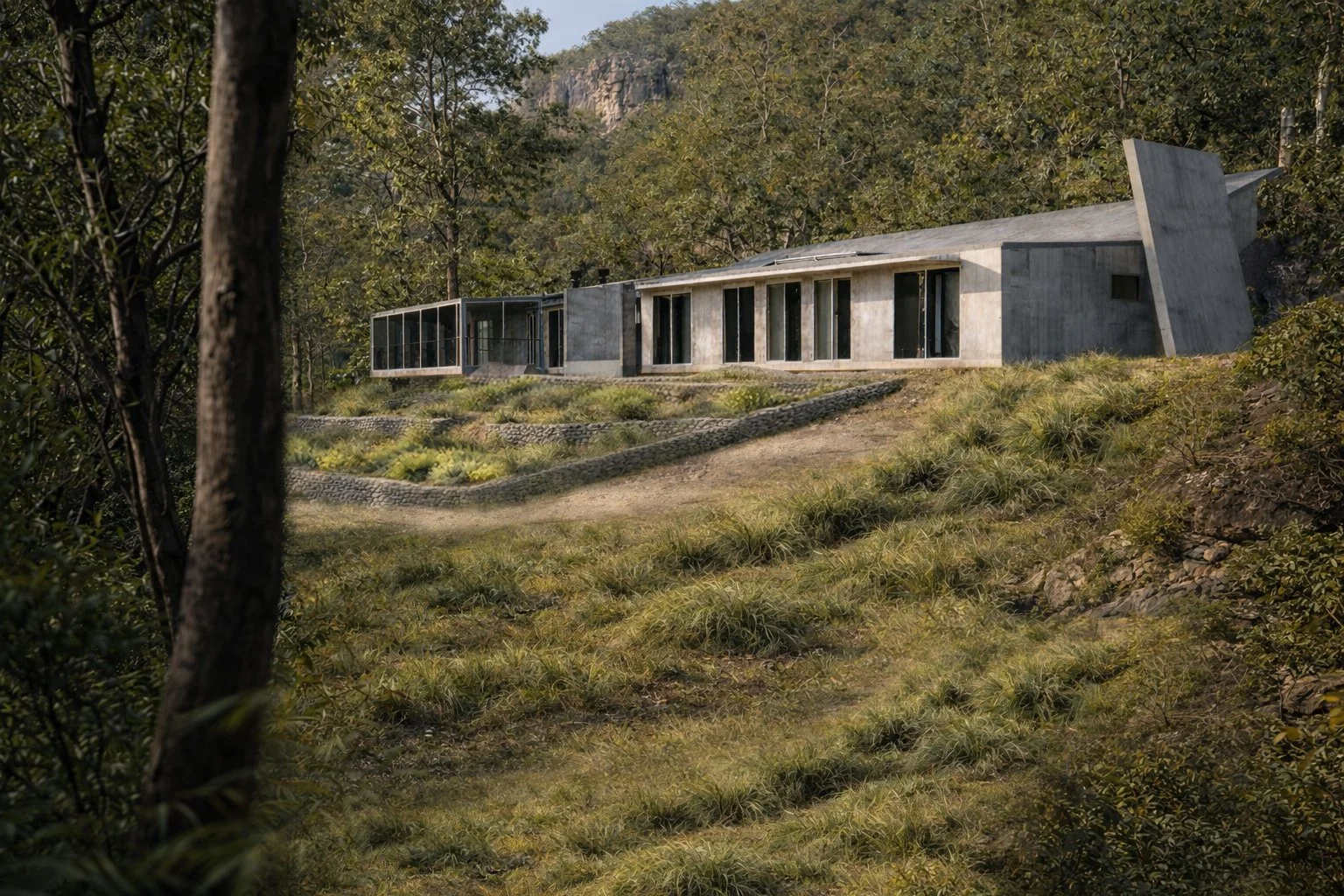
The residence is designed as an integral part of this environmental commitment. Shaped directly by the land, it follows the contours of an existing sandstone platform, ensuring the building feels embedded rather than imposed. Elevated above the valley floor, the home captures winter sun, cooling breezes, and expansive filtered views across forests, cliffs, and wetlands, while remaining recessive and visually protected from neighbouring properties. An existing clearing and established access road minimise disturbance to landform and vegetation. The house operates off-grid and is designed to weather naturally, allowing concrete surfaces to soften and blend into the surrounding bushland over time.
The site, located within the Hawkesbury LGA, comprises predominantly native bushland with identified vegetation communities of ecological value. Environmental assessments confirm low impact, with no threatened plant species affected and no critical wildlife habitat compromised. Impacts are limited largely to shrubs within the Asset Protection Zone, remaining below biodiversity offset thresholds. Comprehensive mitigation measures ensure ecological protection during and after construction.
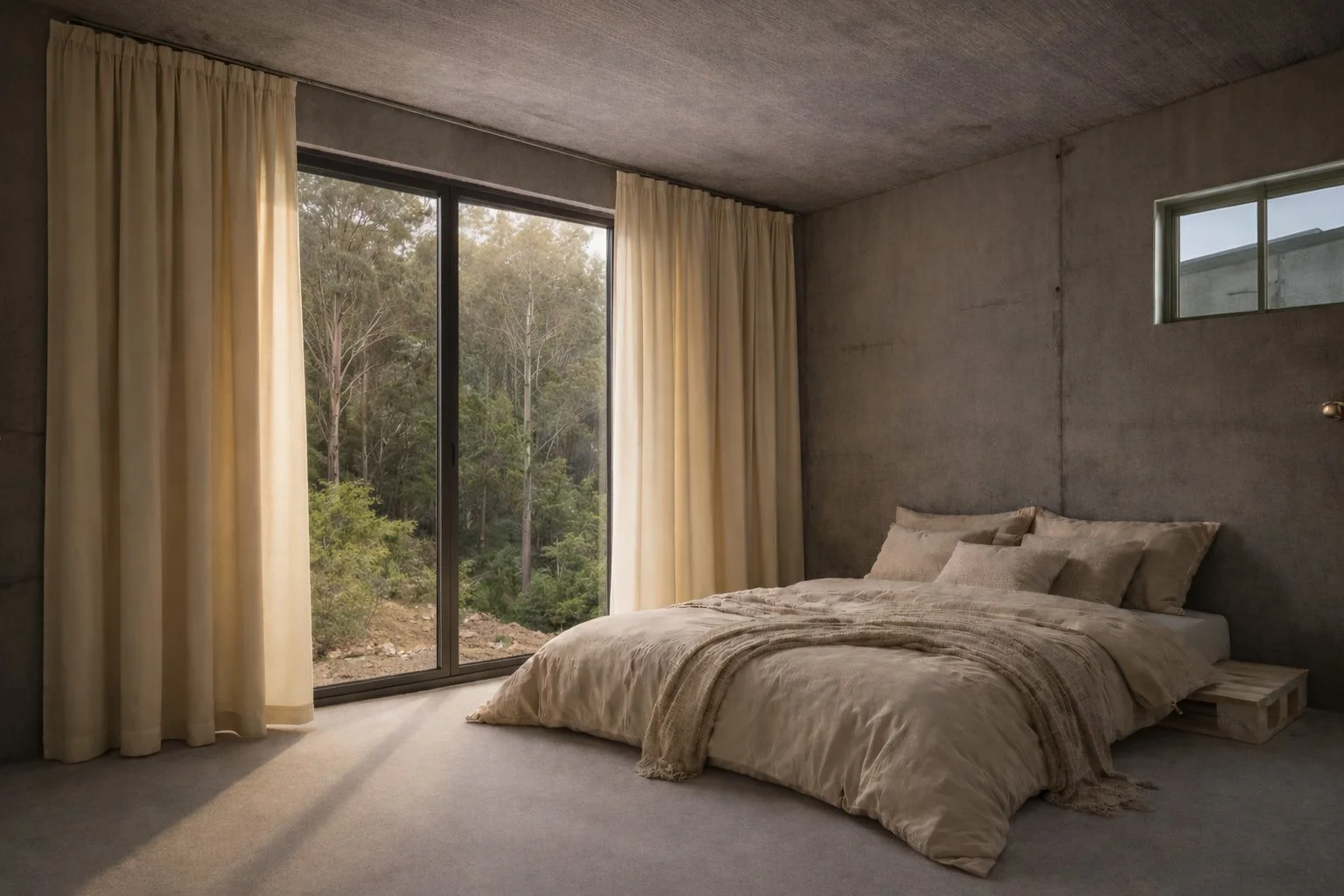
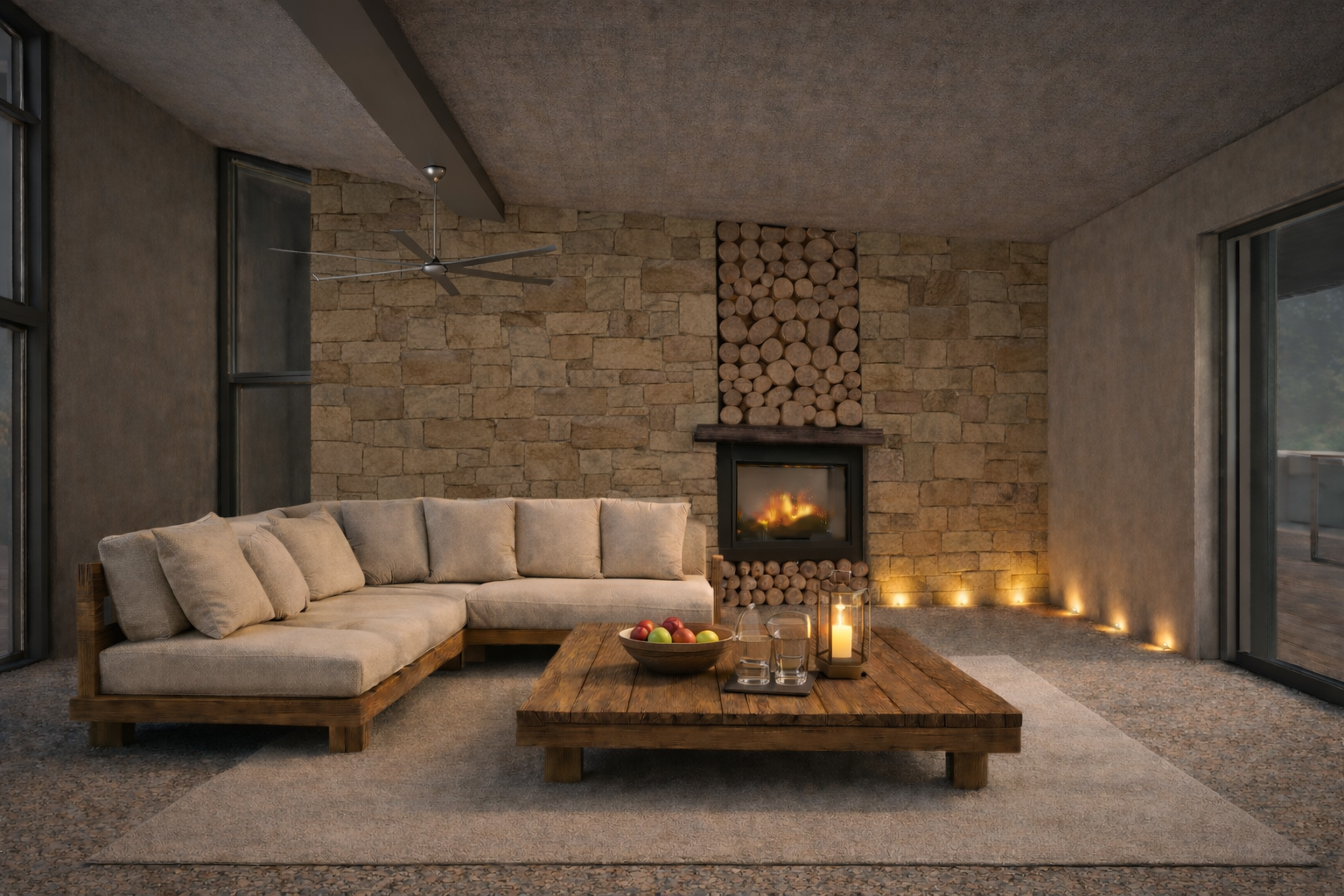
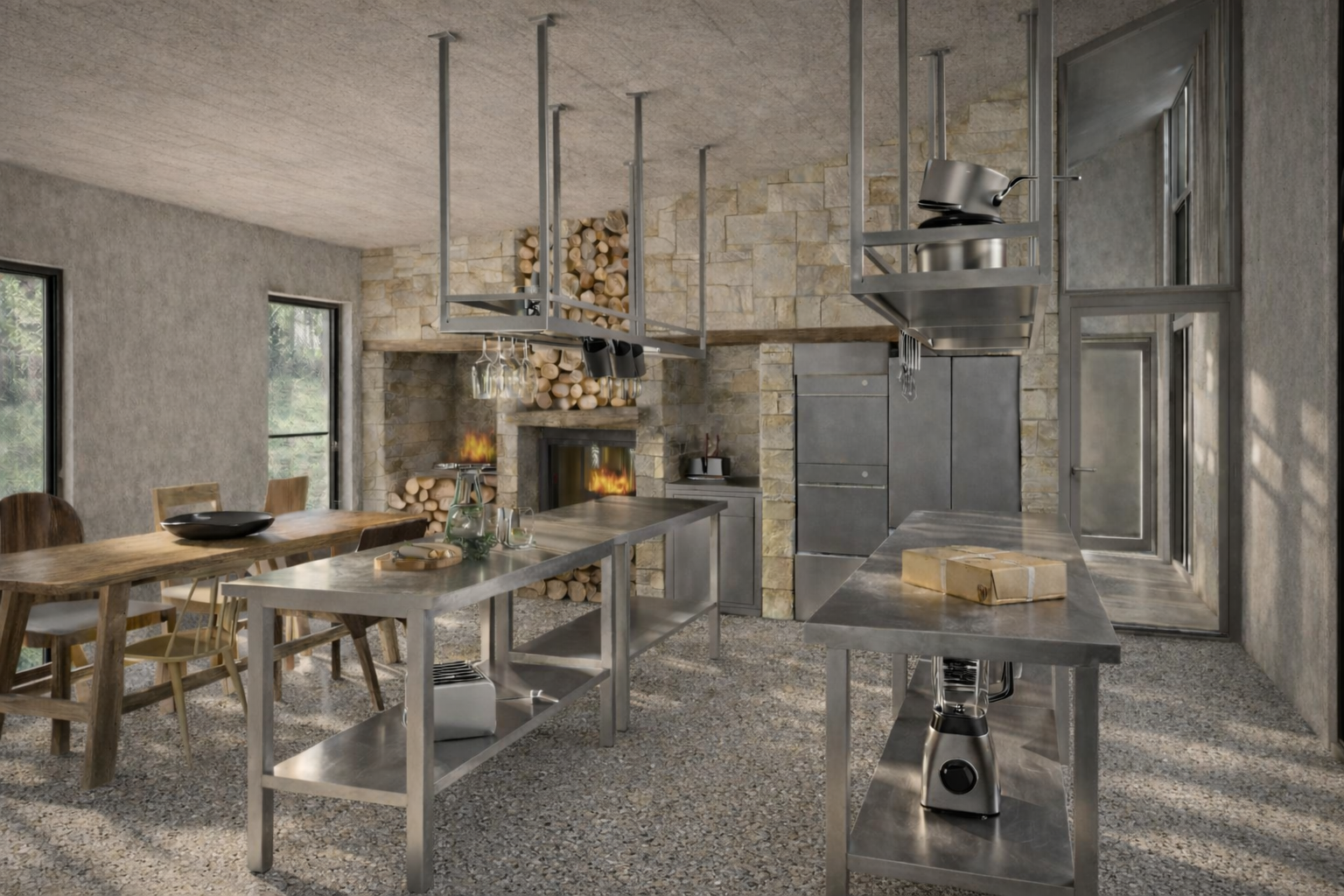
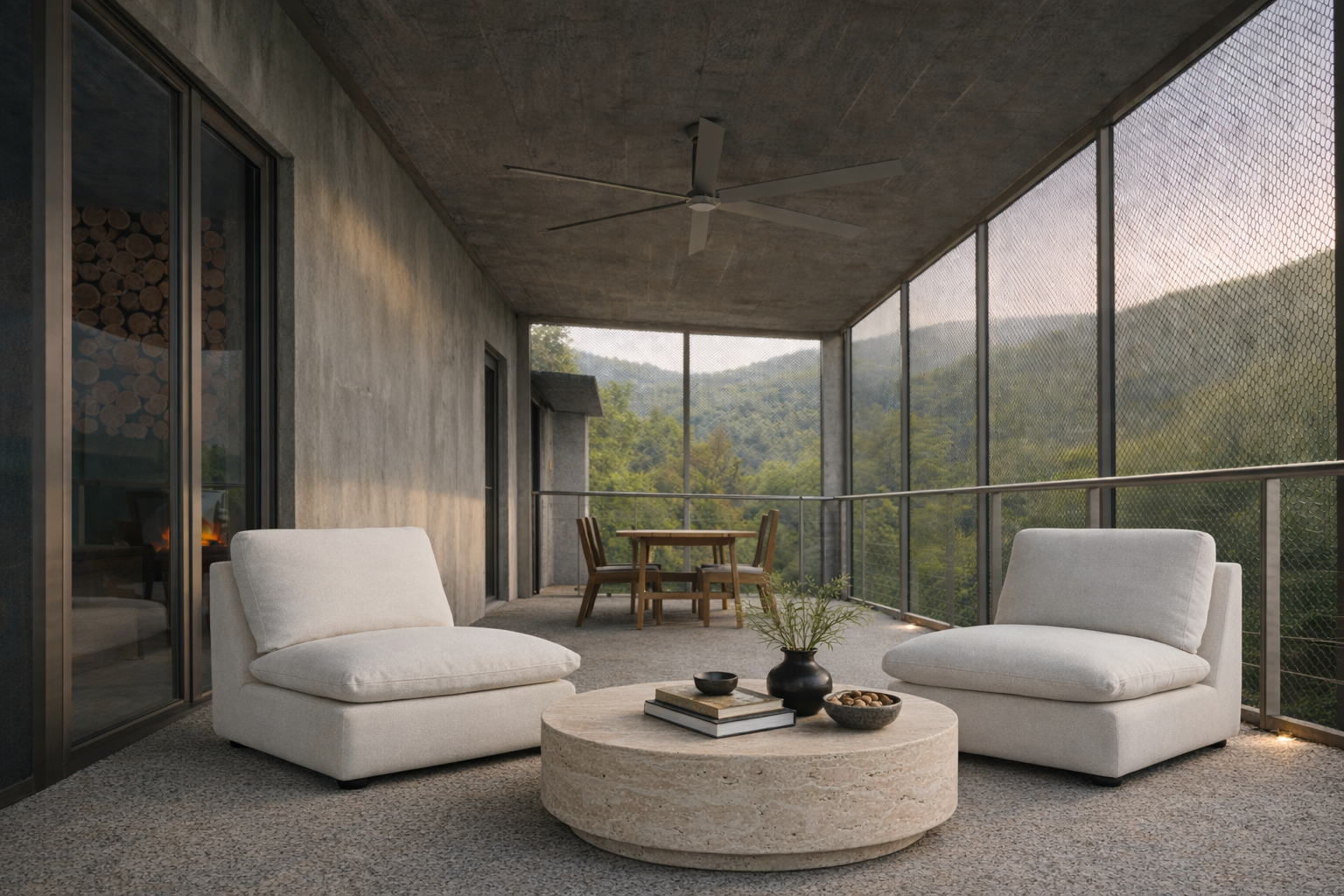
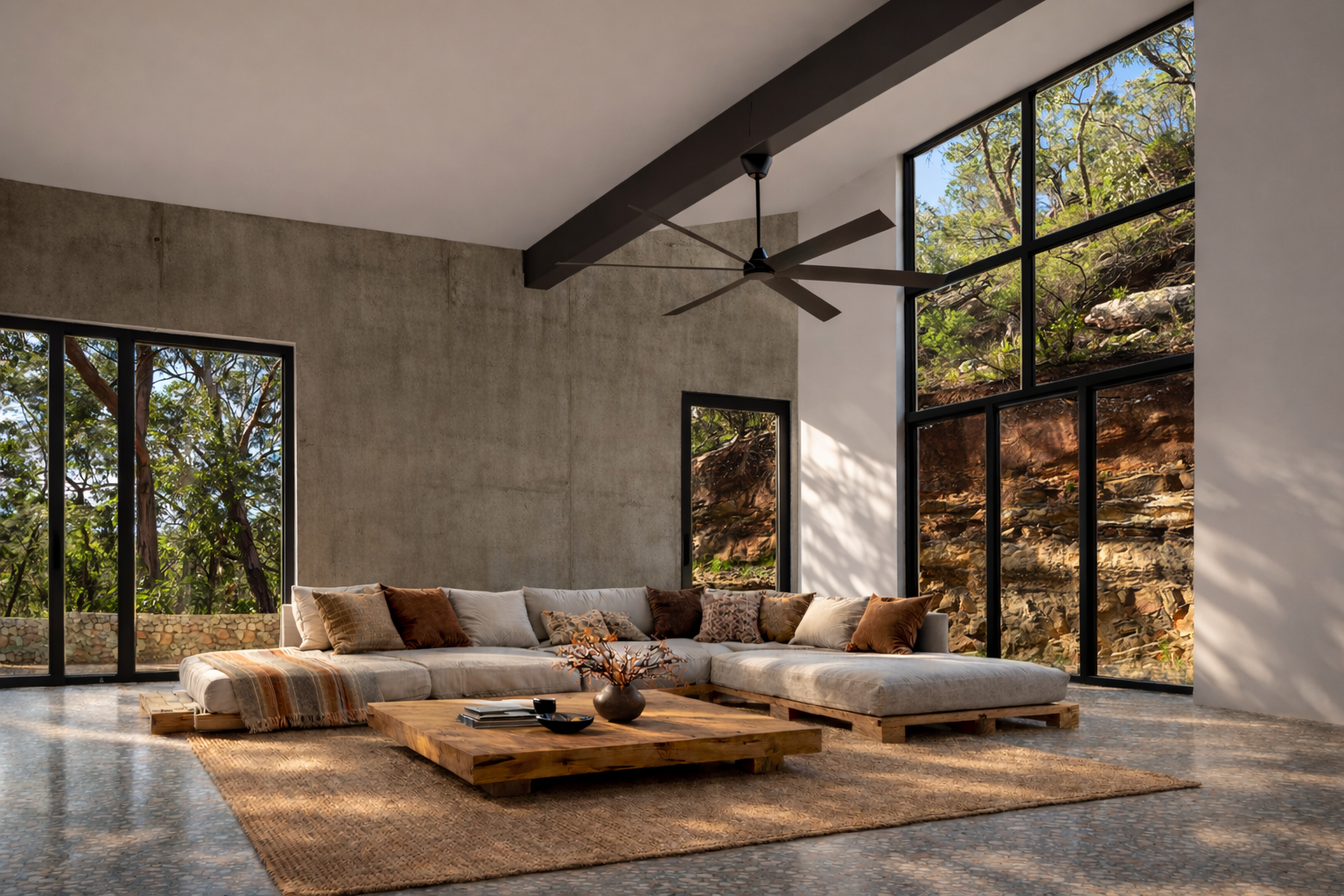
The home is modest in scale and organised around a central verandah that functions as the primary living space, seamlessly connecting indoors and outdoors. North-facing living areas maximise light and views, while southern openings frame the sandstone escarpment. Durable, non-combustible materials support resilience to fire, flood, and heat, prioritising passive design and early evacuation over heavy intervention.
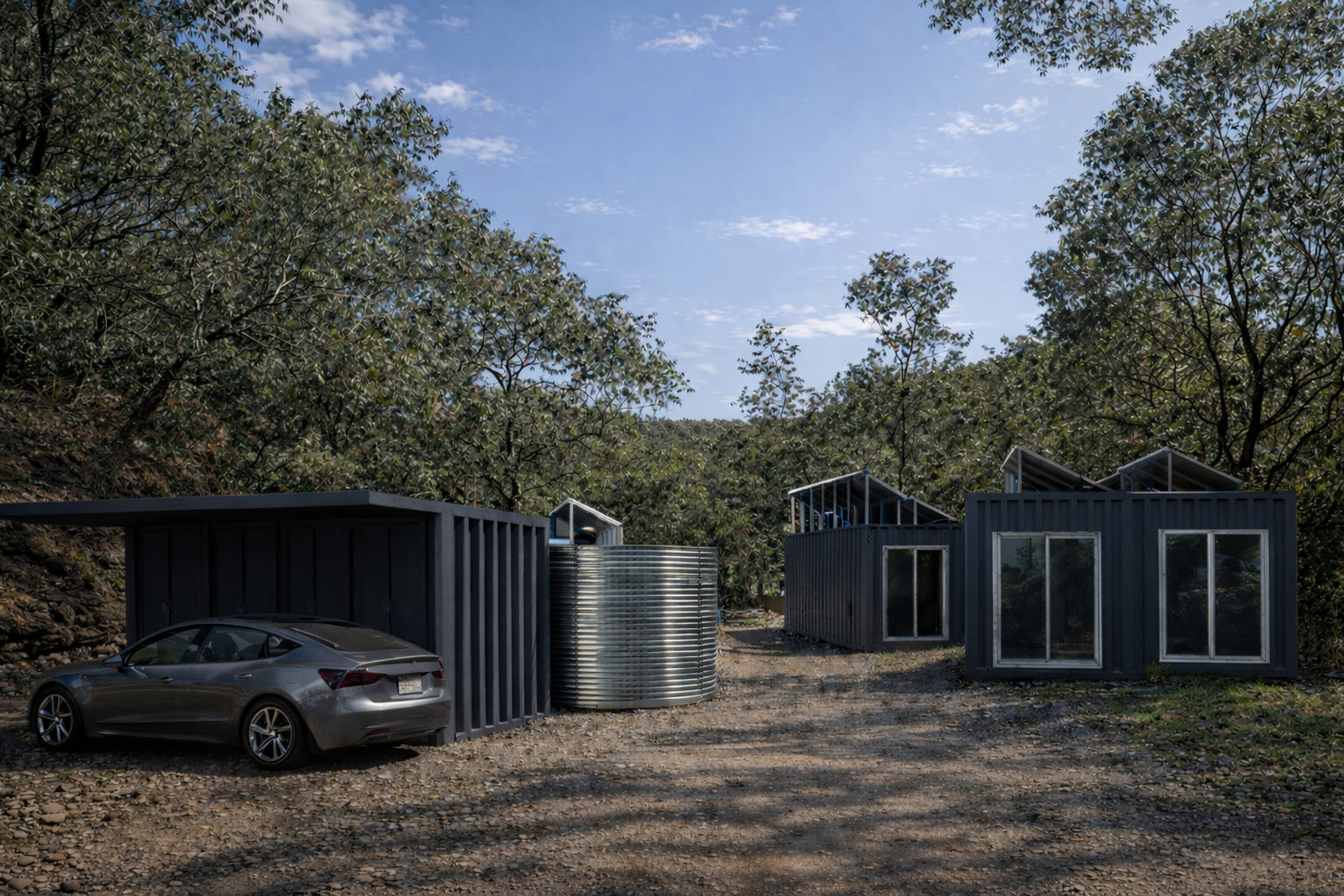
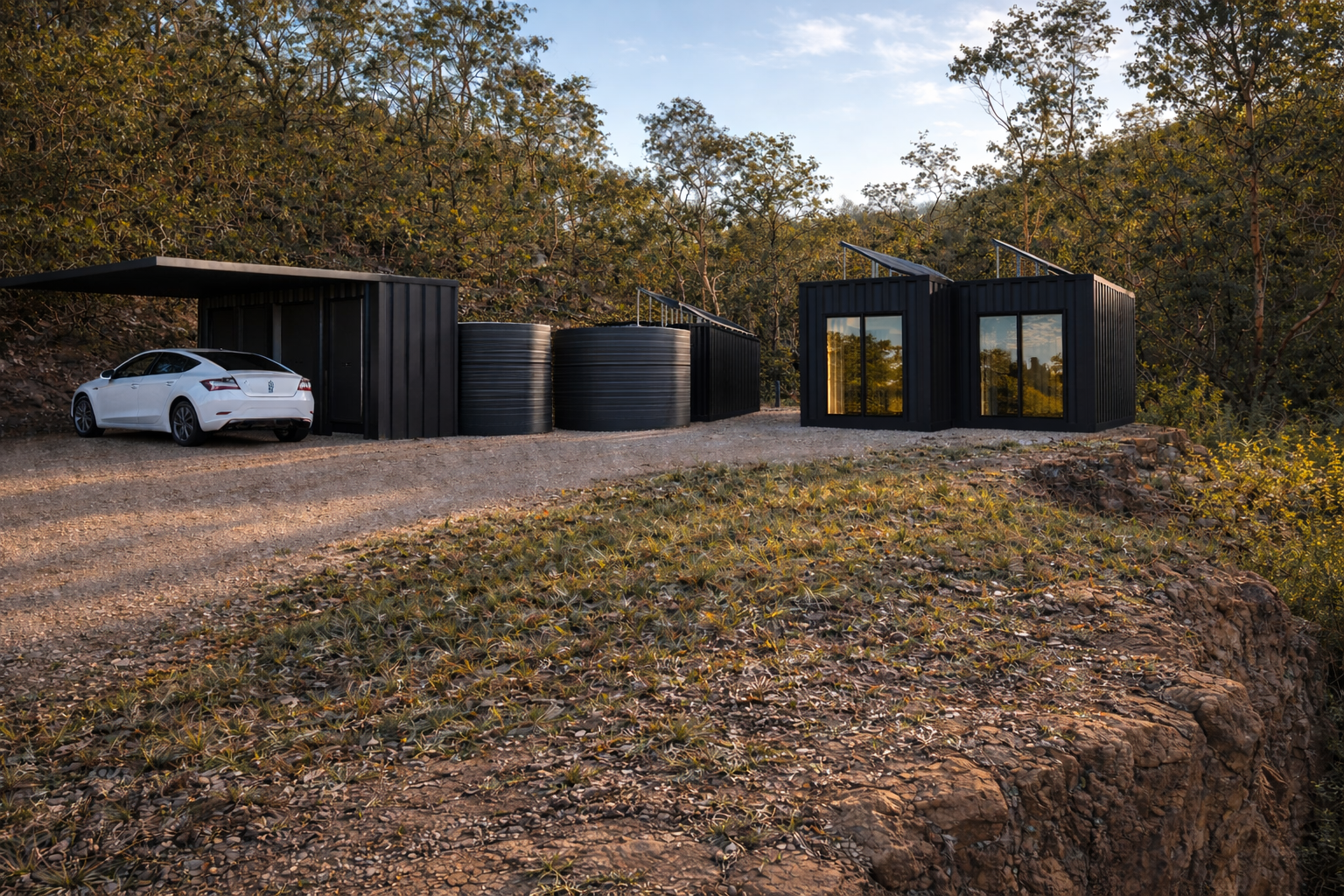
Together, the residence and outbuildings form a quiet, carefully considered response to place. Angophora embodies an architecture of care offering shelter without dominance, comfort without excess, and a deep, enduring connection to land, climate, and time.
See aesthetic report